

Food & Beverage
Preserving product quality and ensuring consumer satisfaction and safety is critical across food, beverage, cold chain and shelf-stable dairy packaging. Product solutions such as light-blocking and barrier technologies must accommodate different processes and end-package requirements to deliver extended shelf life and protect product freshness and efficacy. Integration of sustainable materials to meet consumer and regulatory demands is also critical. Across all applications, sustainability, branding, safety and efficacy are key factors in delivering an optimal consumer experience.
Usages
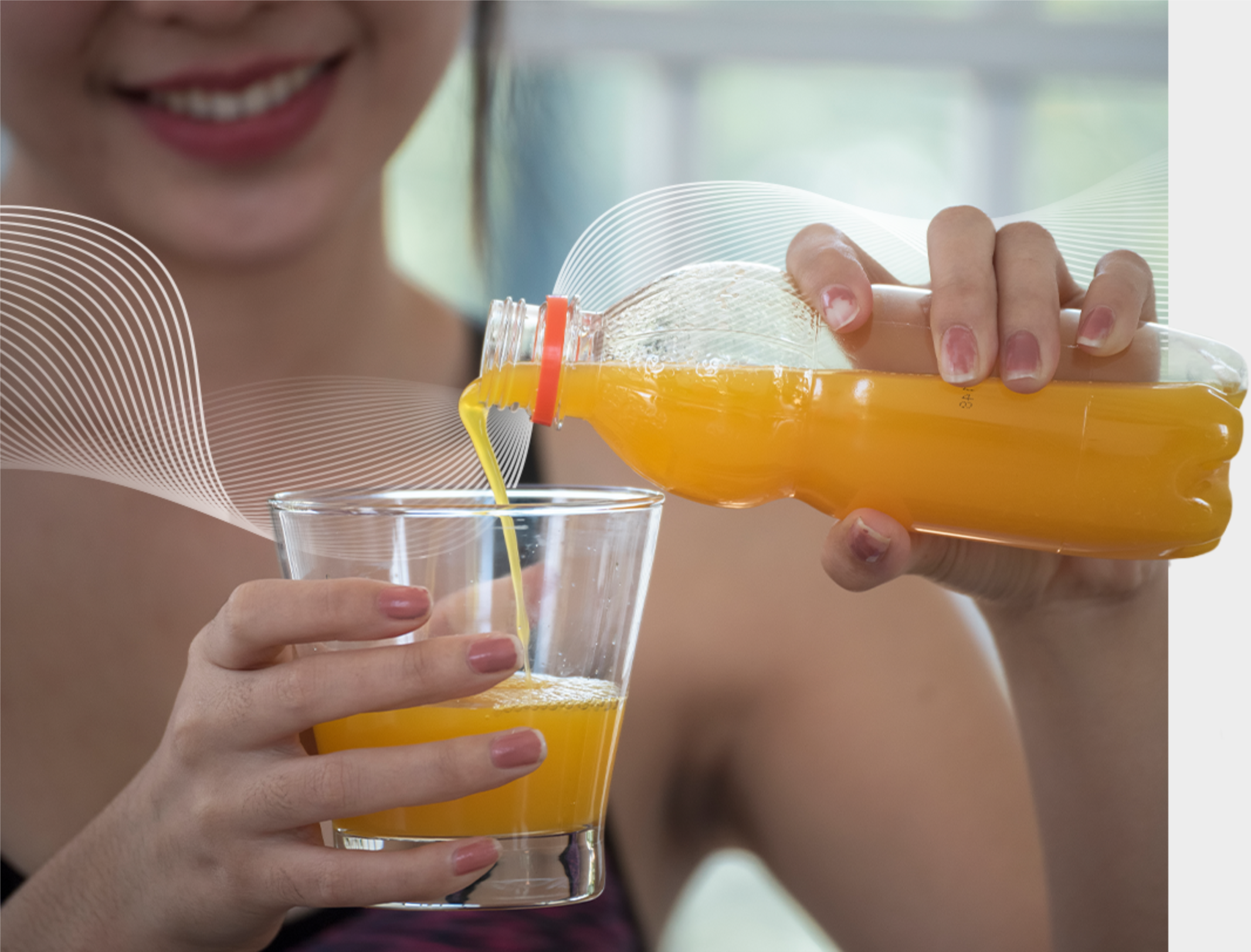
Food and beverage packaging relies on injection stretch blow molding (ISBM), extrusion blow molding (EBM), and injection molding (INJM) to deliver performance, protection, and shelf appeal across a variety of formats. ISBM is widely used for high-clarity beverage bottles, cold chain juices, and shelf-stable dairy that require barrier performance and visual impact. EBM supports squeezable food bottles and multi-layer structures for products like condiments and flavored syrups, while INJM is essential for precision-fit caps, tamper-evident closures, and functional dispensing systems.
Injection Molding
Injection molding (IM) is a high-precision manufacturing process where melted plastic is injected into a mold to create detailed, repeatable parts. In consumer packaging, it’s commonly used to produce caps, closures, jars, pumps, and functional components that require durability, tight tolerances, and high-quality finishes.


.png)











Injection Stretch
Blow Molding
Injection stretch blow molding (ISBM) is a process that combines injection molding and blow molding to produce lightweight, durable containers with excellent clarity and dimensional control. It’s widely used in consumer packaging for PET bottles and containers in applications such as beverages, personal care, nutrition, and household products.




Extrusion
Blow Molding
Extrusion blow molding (EBM) is a manufacturing process where molten plastic is extruded into a hollow tube, then inflated inside a mold to form a container. It’s ideal for producing bottles and containers with handles or complex shapes, commonly used in applications like liquid detergents, shampoos, and household cleaning product packages.